
First Sunday of Advent - Is 2:1-5; Rom 13:11-14; Mt 24:37-44
11-30-2025Weekly ReflectionThe Faithful DiscipleFor many in the upper latitudes of the northern hemisphere, this is the darkest time of the year, the time when the duration of daylight is at its lowest. It’s providential, then, that our first reading calls us to “walk in the light of the Lord!” Paul tells us that we do this by “throw[ing] off the works of darkness” and “put[ing] on the armor of light.” While we might not struggle with the vices listed in Paul’s Letter to the Romans, each of us has our own struggles against sin.
READ MORE
The Solemnity of Our Lord Jesus Christ, King of the Universe
11-23-2025Weekly ReflectionThe Faithful DiscipleSince the birth of my oldest child, I have seen and heard many things about what I should do as a mother. I have heard everything from which products I should purchase to how I should help my child develop a healthy sleep routine. But my identity as a mother is not dependent upon any of these things; instead, it rests on my relationship with God as his beloved daughter and who he has called me to be as a mother. Those living at the time of Jesus were also trying to understand his identity as king according to their own expectations of what a king was meant to be.
READ MORE
33rd Sunday in Ordinary Time
11-16-2025Weekly ReflectionThe Faithful DiscipleWe don’t have to look far to find grief, violence, or chaos in our world. Perhaps it has made its way into our community or has pierced our hearts in deeply personal ways. Or even if the chaos of life has remained at a distance for now, it can be tempting to wonder if the end is near at times. But Jesus warns us against catastrophic thoughts. Listen to what he says in today’s Gospel, when asked how we will know the end time is coming: “When you hear of wars and insurrections, do not be terrified; for such things must happen first, but it will not immediately be the end.” Jesus knew we would need his clear and steady reminder. If you find yourself fearing the state of the world, turn all your senses toward Jesus. Let your anxiety, grief, and concern become catalysts for prayer.
READ MORE
The Dedication of the Lateran Basilica
11-09-2025Weekly ReflectionThe Faithful DiscipleAlthough today’s feast marks the dedication of one of the most important churches for Catholics, the Basilica of Saint John Lateran, it’s ultimately not a celebration of a building, but a celebration of all members of the Church. As Paul reminds us, we are “the “temple of God” and the Spirit of God dwells in us. We see in the Gospel that Jesus has immense love for the temple and wishes to protect it. He uses a whip made from cords to drive out the money-changers, telling them, “Stop making my Father’s house a marketplace.” So, too, he loves and cherishes his Body, the Church – the place his presence dwells. Today’s feast invites us to consider our love and zeal for the Church. As our love for the Lord grows, we will grow to love what our Savior loves.
READ MORE
All Souls Day
11-02-2025Weekly ReflectionThe Faithful DiscipleThere’s a place in every human heart that harbors the fear of rejection. This can affect our relationship with others as well as our relationship with God. In response, many of us develop coping strategies in an attempt to take control of our lives. When fear of rejection threatens our peace, return to today’s Gospel. What does Jesus say? “I will not reject anyone who comes to me.” Let’s pause to read that line again: I will not reject anyone who comes to me. Allow that message to pierce your heart. Jesus will not reject you. Jesus will not fail you. He will not abandon you. In fact, he has prepared a place for you in his kingdom and is waiting for your response of love.
READ MORE
30th Sunday of Ordinary Time
10-26-2025Weekly ReflectionThe Faithful DiscipleToday’s first reading says, “The Lord is a God of justice who knows no favorites.” While we humans show deference to people we admire or give preferential treatment to those we like, God loves all his creatures with the same perfect love. But then the reading goes on to say something that seems to contradict that opening line, even suggesting that God has a soft spot in his heart for the poor: “Though not unduly partial toward the weak, yet he hears the cry of the oppressed.”
READ MORE
29th Sunday in Ordinary Time
10-19-2025Weekly ReflectionThe Faithful DiscipleGROW: Studying Scripture is not a side dish on the plate of practicing the faith. It is an essential component of the virtuous life, and without it, our faith will surely falter. In his second letter to Timothy, Saint Paul reminds us that the Scriptures are the inspired Word of God and they train us in righteous living and equip us for every good work. There will undoubtedly be times when we feel ill-equipped – when we are fatigued, frustrated, or concerned. It is precisely in these moments that we’re invited to go quickly to the holy Word of God! Read it, pray with it, and invite the Spirit to speak to you through it. There you will find the wisdom needed to face every circumstance.
READ MORE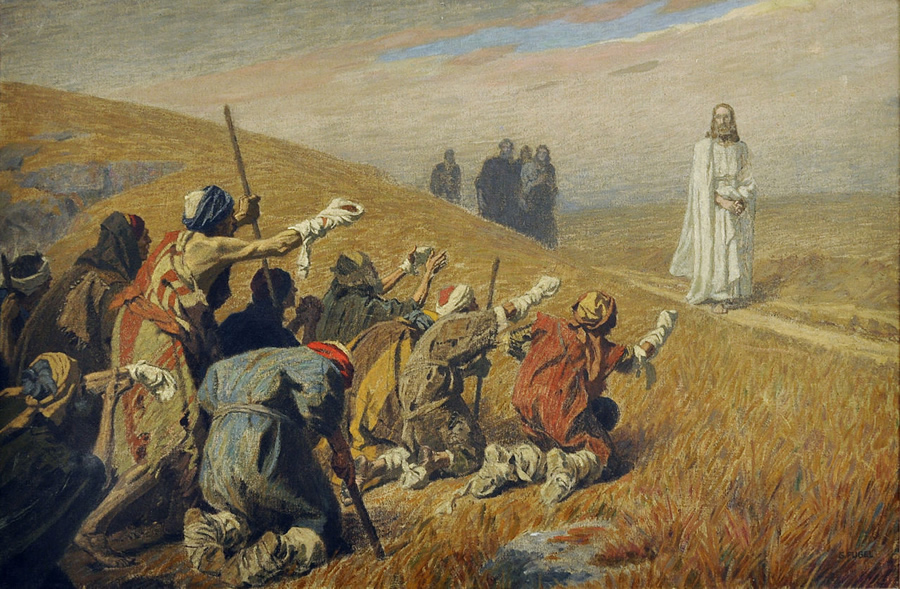
28th Sunday in Ordinary Time
10-12-2025Weekly ReflectionThe Faithful DiscipleAfter his healing in the Jordan river, Naaman returns to Elisha. It’s clear from their ensuing conversation that his miraculous healing had led to him recognizing the God of Israel as the one who had healed him. In thanksgiving, he desires to offer sacrifice, and pledges that he “will no longer offer holocaust or sacrifice to any other god except the Lord.” In the Gospel, we see the Samaritan returning to Jesus after his healing, falling at the Lord’s feet and “glorifying God in a loud voice.” It’s clear from both Scriptures that when we recognize what God has done for us, our first response is to worship.
READ MORE
27th Sunday in Ordinary Time
10-05-2025Weekly ReflectionThe Faithful DiscipleIn today’s Gospel, Jesus tells his disciples: “When you have done all you have been commanded, say, ‘We are unprofitable servants; we have done what we were obliged to do.’” I think what Jesus is drawing us to see is the humility we need as his disciples. It’s easy to get puffed up, thinking, “Well, I’ve done this” or “I’ve done that” in service of God. We can even start to feel that God owes us. But we are called to love God for God’s own sake, not for the accolades or even the reward that comes from faithfully serving him.
READ MORE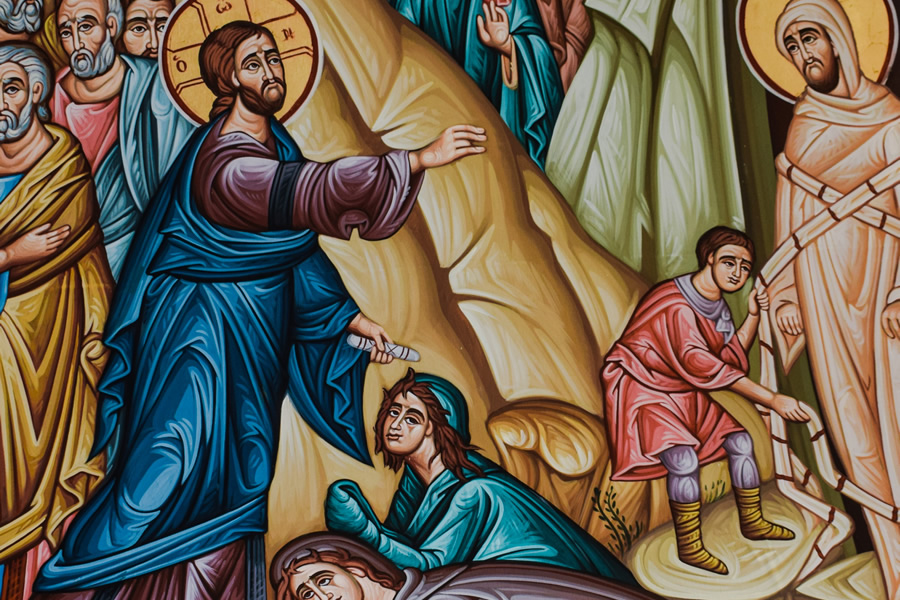
26th Sunday in Ordinary Time
09-28-2025Weekly ReflectionThe Faithful DiscipleHave you ever had a moment when you felt yourself to be the underdog, and wished that there were some champion who would come and defend your cause? Today, we see God described in those terms. Our psalm tells us that the Lord “raises up those who are bowed down,” that he “protects strangers,” and “the fatherless and the widow he sustains.” But God doesn’t stop there. He wants us to become champions for the poor. Notice that our Gospel reading depicts the poor man named Lazarus in such a way that we cannot help but feel compassion for him.
READ MORE
25th Sunday in Ordinary Time
09-21-2025Weekly ReflectionThe Faithful DiscipleAs Catholics we understand that none of our actions are truly isolated. Every virtue we practice or sin we commit affects others because we are all members of the body of Christ. Today’s readings from the Old and New Testaments highlight our interconnectedness and offer guidance for how to order the life of the community according to God’s will. The key to tranquil communal life is to consider the needs of others as important as our own. In the first reading, the prophet Amos decries those who exploit the poor for personal gain, putting profit over the common good.
READ MORE
The Exalatation of the Holy Cross
09-14-2025Weekly ReflectionThe Faithful DiscipleAlthough God had freed our ancestors in faith from their slavery in Egypt, today we find them grumbling against the Lord as they wander in the desert. Even after we’ve glimpsed so much of God’s goodness, we, too, can begin to grumble in challenging moments of our lives. It’s precisely then that we need to cling to faith. After serpents appeared and began to bite those who had grumbled against God, those who had been bitten only had to look at the serpent mounted on a pole and put their faith in God once again to be healed.
READ MORE
23rd Sunday in Ordinary Time
09-07-2025Weekly ReflectionThe Faithful DiscipleI am particularly struck by this line from Solomon’s prayer in today’s first reading from the Book of Wisdom: “Or who ever knew your counsel, except you had given wisdom and sent your holy spirit from on high?” Solomon doesn’t seem to be seeking direct answers to the questions he presents today, but rather, uses them as a sort of poem of praise to honor God in all his glory. In modern language, we could rephrase his questions: What do we know that God has not instilled into our minds? What wisdom do we have that was not infused by the Holy Spirit? There are many things that we cannot understand without the wisdom God gives us. May we, like Solomon, praise and thank God for this gift. Let us trust that where our feeble, corruptible humanity falters, our heavenly Father is our refuge in every age.
READ MORE