
Seventh Sunday in Ordinary Time - 1 Sam 26:2, 7-9, 12-13, 22-23; 1 Cor 15:45-49; Lk 6:27-38
02-23-2025Weekly ReflectionThe Faithful Disciple“Love your enemies” may be one of the most oft-quoted verses of Scripture. We tend to think of it as a moral principle to guide us in our dealings with people who rub us the wrong way. But do we ever consider what it tells us about God? After all, Jesus, who is God himself, speaks it. God tells us to love our enemies because God loves his “enemies” – that is, those who freely choose to oppose his plan of life and love.
READ MORE
Sixth Sunday in Ordinary Time - Jer 17:5-8 1; Cor 15:12, 16-20; Lk 6:17, 20-26
02-16-2025Weekly ReflectionThe Faithful Disciple“It is so good to be poor, to have nothing, to await all from God!” These sentiments of the humble French religious sister St. Jeanne Jugan sum up the spirit of Jesus’ words in today’s Gospel. Jesus praises poverty, hunger, sadness, and rejection, but certainly not as ends in themselves; God does not take pleasure in our suffering! He does use our suffering, however, to awaken us to our need for him. Poverty can spur us to pursue heavenly goods, and thus Jesus assures the poor, “the kingdom of God is yours.”
READ MORE
Fisherman
02-09-2025Weekly ReflectionTom SchmidtFor a humble guy, St. Paul really tells it like it is. Paul lists those witnesses who actually saw the risen Jesus, last and least of these being Paul himself. Now we are used to thinking of Paul as one of the greatest apostles, even though we know he once persecuted Christians. So you might think he is being overly humble, like someone fishing for a compliment. No, Paul is only interested in making sure the Corinthians understand just how much God has done.
READ MORE
Feast of the Presentation of the Lord Unwavering Fidelity to God’s Will
02-02-2025Weekly ReflectionTami UrciaIn the old tradition of the Church, the Christmas season was celebrated up until this day, the Feast of the Presentation of the Lord. This allowed for 40 days of bringing to mind the glorious day of Christ’s birth on earth, similar to the 40 days we celebrate from Easter Sunday until the Feast of the Ascension. While current calendars have us taking down our trees at the Baptism of the Lord, just three short Sundays after the Nativity, today’s Feast still holds great significance.
READ MORE
Third Sunday in Ordinary Time - Neh 8:2-4a, 5-6, 8-10; 1 Cor 12:12-30; Lk 1:1-4; 4:14-21
01-26-2025Weekly ReflectionThe Faithful DiscipleGROW: Late 19th-century English author G.K. Chesterton famously wrote, “Catholic doctrine and discipline may be walls, but they are the walls of a playground.” We can think of God’s commandments serving as rules governing primary school recess: by providing us with a structure in which we can explore, play, stumble, and get up again, they allow us to discover who God created us to be without wandering far from his love.
READ MORE
Second Sunday in Ordinary Time - Is 62:1-5 1; Cor 12:4-11; Jn 2:1-11
01-19-2025Weekly ReflectionThe Faithful DiscipleGROW: Pop quiz: What was the name of the bride and groom at the wedding in today’s Gospel? If you’re unsure, you’re not alone; the bridegroom is mentioned only in passing and the names of the newlyweds are not recorded at all in Scripture. Instead, the most prominent man in the account is Jesus; the most prominent woman is his mother, the Blessed Virgin Mary. In light of today’s first reading, this apparent omission begins to make sense.
READ MORE
The Baptism of the Lord - Is 42:1-4, 6-7; Acts 10:34-38; Lk 3:15-16, 21-22
01-12-2025Weekly ReflectionThe Faithful DiscipleGROW: In many renditions of the Baptism of Jesus, artists connect the scene at the Jordan River with Jesus’ death. A withered tree, for example, reminds us of the cross, or a mountain points to Mount Calvary. These connections show a real relationship between Jesus’ baptism and his passion: his baptism marks the acceptance and beginning of his mission, which would ultimately lead to his crucifixion. For us, too, baptism is a decisive moment which destines us for – you guessed it – death! Not physical death (which will happen regardless), but a death to everything that is not of God.
READ MORE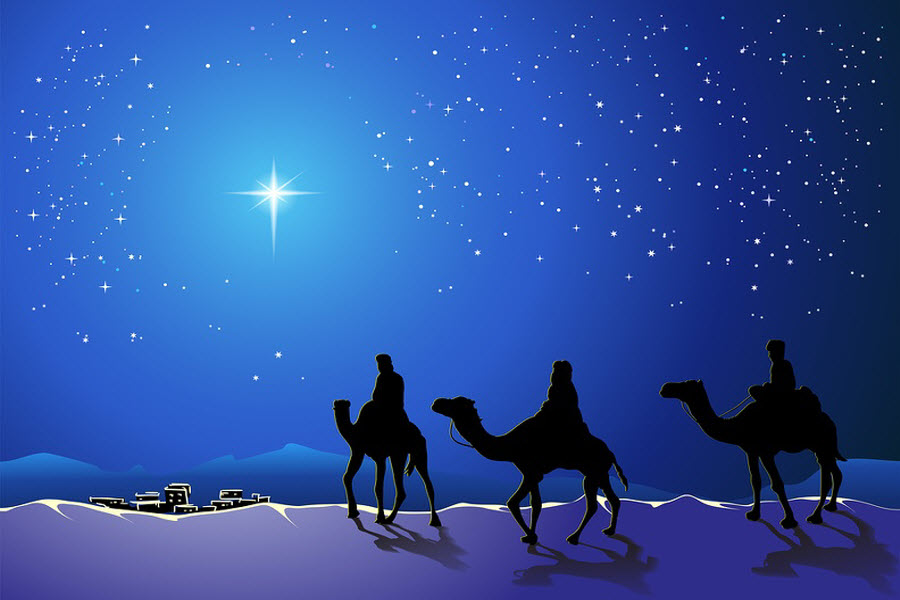
Epiphany of the Lord - Is 601-6; Eph 32-3a, 5-6; Mt 21-12
01-05-2025Weekly ReflectionThe Faithful DiscipleGROW: Deeply fatigued from their perilous journey, the three wise men must have been filled with doubt and hope in equal measure, wondering if the star would truly lead them to the promised King. “Is this really worth it” they may have questioned. “Will we ever meet this child” And then, in a single gaze, Christ broke into the world of humanity. In this perfect encounter with the Son of God, the wise men “prostrated themselves” and “opened their treasures” before him – in all his glory and all his innocence.
READ MORE
Feast of the Holy Family of Jesus, Mary, and Joseph - Sir 3:2-6, 12-14; Col 3:12-21; Lk 2:41-52
12-29-2024Weekly ReflectionThe Faithful DiscipleGROW: Compassion, kindness, humility, gentleness, and patience. These are the attributes Paul instructs the Colossians in today’s reading to “put on” or to “clothe” themselves with. It’s quite a list, isn’t it? Paul goes on to talk about the virtues of the Christian family, which is fitting for today’s Feast of the Holy Family. It is reasonable to expect, then, that the Gospel passage would follow through by expounding on the virtues of the perfect family: Jesus, Mary, and Joseph.
READ MORE
Fourth Sunday of Advent - Mi 5:1-4a; Heb 10:5-10; Lk 1:39-45
12-22-2024Weekly ReflectionThe Faithful DiscipleGROW: Ask a child, “Where is God?” and you’ll likely receive a variety of responses: “in heaven,” “in church,” “everywhere” and “in my heart” are all conceivable answers from a child’s lips. But the one we most easily write off as silly or sentimental is one that the saints would urge us to revisit more seriously: God is indeed “in my heart” – that is, he is present in our souls! This is true not only when we receive him in Holy Communion, and not only because he is “everywhere,” but because we possess sanctifying grace.
READ MORE
Third Sunday of Advent - Zep 3:14-18a; Phil 4:4-7; Lk 3:10-18
12-15-2024Weekly ReflectionThe Faithful DiscipleGROW: “I want to be a sanctuary lamp,” Samantha, my childhood friend, once remarked. “To be the little flame that reminds everyone, ‘God is here.’” In those short phrases, Samantha summarized not only her personal vocation, but also the all-important mission of St. John the Baptist. Like the candle burning before the tabernacle, St. John was not the long-awaited Messiah; his God-given task was to point others to Jesus. We hear this theme of St. John’s message expressed repeatedly in today’s readings: “The King of Israel, the Lord, is in your midst”; “Great in your midst is the Holy One of Israel!”; “one mightier than I is coming.”
READ MORE
Second Sunday of Advent - Bar 5:1-9; Phil 1:4-6, 8-11; Lk 3:1-6
12-08-2024Weekly ReflectionThe Faithful DiscipleGROW: On this second Sunday of Advent, when the hustle and bustle of the season is already upon us, I find Paul’s words in his Letter to the Philippians very comforting. He says he is confident “that the one who began a good work in [us] will continue to complete it until the day of Christ Jesus.” Jesus will continue to be our Advocate and our Rock until the day he comes again.
READ MORE
First Sunday of Advent - Jer 33:14-16; 1 Thes 3:12—4:2; Lk 21:25-28, 34-36
12-01-2024Weekly ReflectionThe Faithful DiscipleGROW: Are you one of those people who flips to the end of the book to find out what happens or maybe you roam the internet for spoilers of your favorite show? We have all been tempted to know what is going to happen before whatever it is unfolds, especially in tension-filled situations. Knowing the ending changes the way we experience the angst of the present moment, especially if it’s a great ending! Like today: even as we anticipate and know the comfort and joy of the Advent season, we certainly do not begin there with our Gospel reading from Luke.
READ MORE